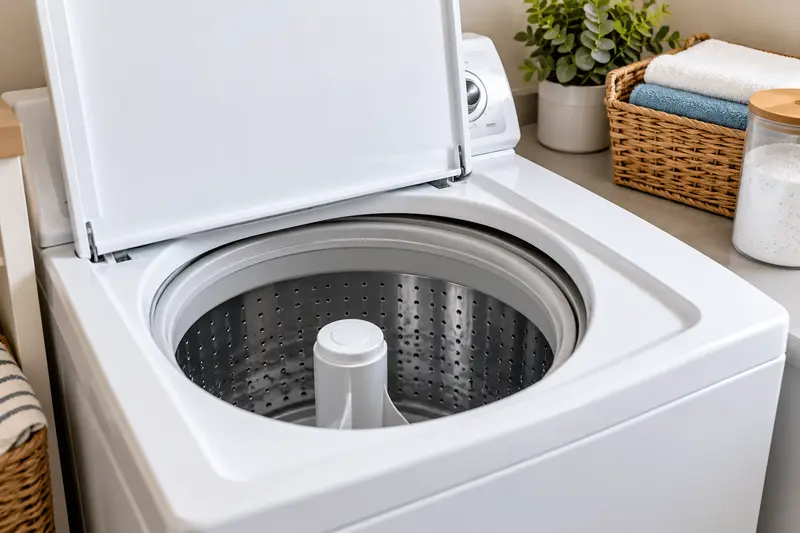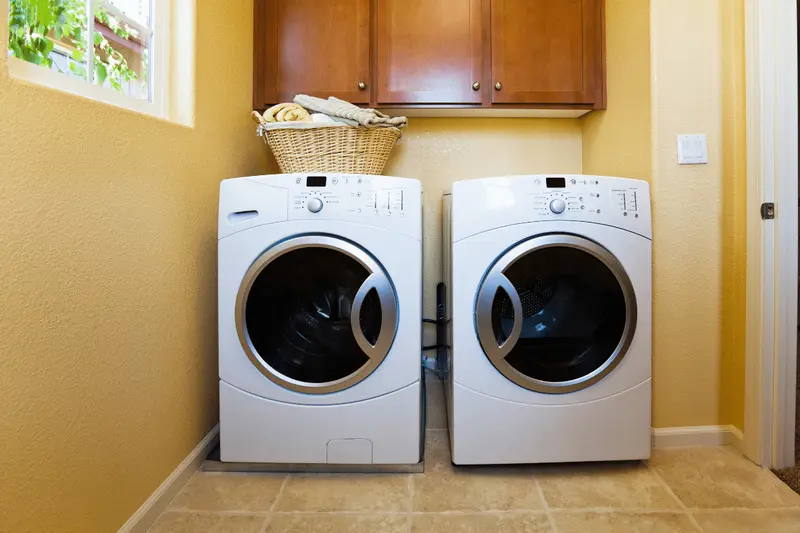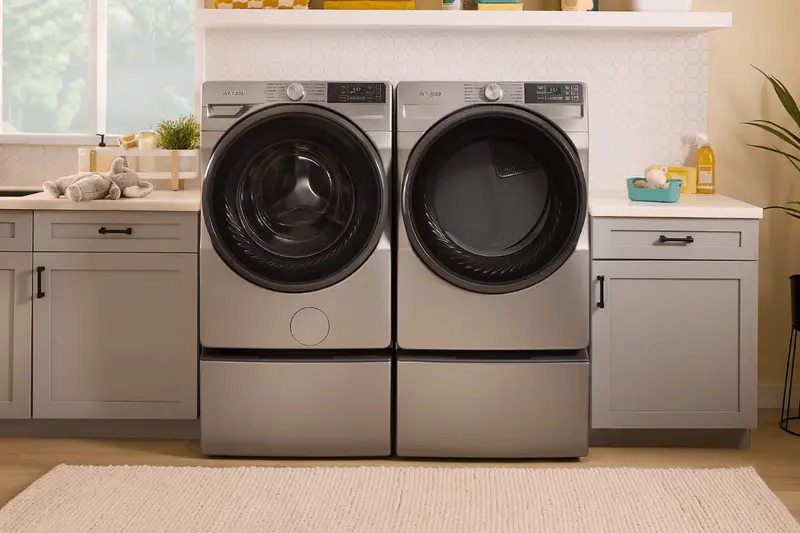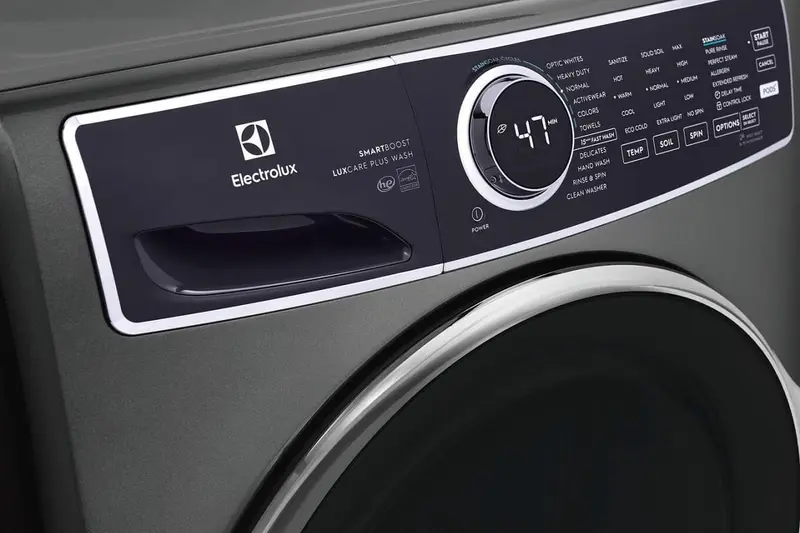
Your laundry comes out of the washer smelling a little musty, or a Self Clean light starts blinking on the control panel. Either way, the washer itself needs cleaning. Every load leaves behind a little detergent and moisture, and over time that film builds up in places you can't see, which is what leads to odors and mildew.
Samsung builds a cleaning cycle into most of its washers to deal with exactly that. The short answer: empty the tub, select Self Clean, and let it run, which takes about an hour on a top load washer and about four hours on a front load. Below, we'll walk through how to use the Samsung washer Self Clean cycle, how often to run it, and what to do if your washer already smells of mildew.
How to Use the Samsung Washer Self Clean Cycle
Self Clean is a maintenance cycle, not a wash cycle. It's designed to clean the inside of the washer, so it always runs with the tub empty, and for routine cleaning you don't need to add detergent or any other cleaner.
Starting a Self Clean Cycle
Take everything out of the drum first, because running Self Clean with laundry inside can damage both the washer and the clothes. Then close the lid or door, press Power, choose Self Clean, and press Start/Pause. Some newer front load models call the cycle Self Clean+, and some older top load models use a button called Pure Cycle instead. Your owner's manual shows the exact buttons for your model.
How Long Self Clean Takes
Once the cycle starts, the washer displays the estimated time remaining. Expect about one hour on a top load washer and about four hours on a front load, though the exact time varies by model. That's why many people start it in the evening or on a day they won't need the washer.
When it finishes, give it a little time before you reach in. Samsung warns that the water can be very hot after a Self Clean cycle and recommends waiting about an hour so it can cool.
How Often to Run Self Clean
Your washer will remind you when it's time for a Samsung washer Self Clean cycle. The Self Clean light comes on after about 20 washes on most top load models and about 40 washes on front load models. You don't have to run it the moment the light appears, but it's best to run it at your earliest convenience.
If you don't do much laundry, don't wait for the light at all. Running Self Clean at least once a month keeps residue from building up between reminders.
What to Do If Your Samsung Washer Already Smells of Mildew
A regular Self Clean cycle is great for prevention, but once a washer already smells of mildew or shows visible mold, it needs something stronger. This is the one time bleach goes into a Self Clean cycle. You don't need it for routine maintenance.
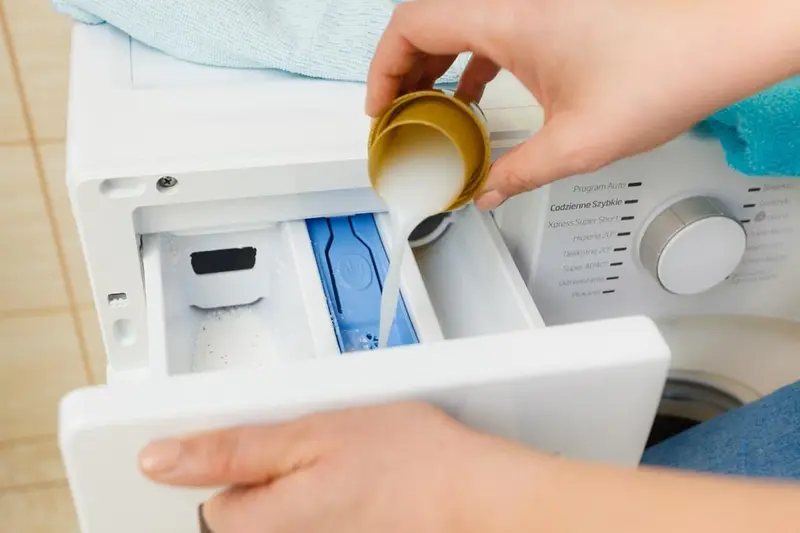
Start with an empty washer and pour liquid chlorine bleach into the detergent compartment up to the max line, not the bleach compartment. Then start Self Clean, Self Clean+ or Pure Cycle right away, because Samsung advises against letting bleach sit in the washer. When the cycle ends, wipe the inside of the tub with a dry cloth or paper towel to remove any loosened residue. Your manual may list an extra step for your model, such as a spin-only cycle first.
If the smell comes back after a few treatments, the source is probably something a cleaning cycle can't reach, such as a drain problem or water sitting where it shouldn't. At that point it's worth having the washer looked at. For more on odor problems in front load washers, see our guide on why front load washers smell.
How to Keep Your Samsung Washer Fresh Between Self Clean Cycles
Running the Samsung washer Self Clean cycle on schedule is the biggest step, but a few everyday habits make a real difference too. They all come down to the same idea: don't give moisture and leftover detergent a chance to sit inside the washer.
Let the Washer Dry Out
Take laundry out as soon as the cycle ends, because wet clothes sitting in the drum are one of the fastest ways to get a musty smell. After each use, wipe the tub, the detergent drawer and, on front load washers, the rubber door seal with a clean, dry cloth. Then leave the door or lid open so the spots you can't reach can dry out too.
Use the Right Detergent, in the Right Amount
Too much detergent leaves residue behind, and that residue is what odors feed on. Use HE detergent and never fill past the MAX line in the detergent drawer. Powdered detergent tends to leave less buildup than liquid, so it's worth trying if odors keep coming back. Fabric softener builds up over time as well, so a dryer sheet in the dryer, or a small amount of distilled white vinegar in the washer, is a better choice.
Mind the Load Size and the Pump Filter
Load size matters more than most people think. An overloaded washer leaves extra moisture behind, while very small loads can leave extra detergent residue, so aim for loads that fill the drum loosely. Most front load models also have a pump filter behind a small panel near the bottom front, and keeping it clean helps the washer drain fully. Your manual shows how to clean it for your model, or a technician can clean it during a service visit.
When Self Clean Isn't Enough
The Samsung washer Self Clean cycle handles routine buildup, but it can't fix a mechanical problem. Call for service if the odor keeps coming back after several Self Clean and bleach treatments, if water is left in the drum after cycles, if the washer won't drain or spin properly, or if Self Clean won't start or stops partway through.
Apex Appliance Repair & Service works on Samsung washers across North County and the greater San Diego area. Learn more about our washer repair service and our Samsung appliance repair, or schedule washer repair in San Marcos.
Quick Answer
What if my Samsung washer doesn't have a Self Clean button?
Some older Samsung washers use a Pure Cycle instead, which works the same way and should run without detergent or bleach. If your washer has neither, run a Normal cycle for the cleaning steps, and check your owner's manual for anything specific to your model.